
 Dr. Frank C. Laubach said, “Literacy is the first step toward ending the suffering and exploitation of the world’s disadvantaged people.” He traveled to over 100 developing countries teaching people to read and write as a means for social change.
Over 70 years later, we still lean on the values of Dr. Frank and Laubach Literacy International, one of our founding organizations. ProLiteracy has worked for decades to create social change in developing areas worldwide by teaching people to read using lessons developed in the context of issues that are important to the culture of the community.
In Kenya, KALA (Kenya Adult Learners’ Association), a longtime ProLiteracy partner, embodies this. KALA focuses its four levels of literacy work on the five social issues of food security, economic self-reliance, health, environmental management, and civic education.
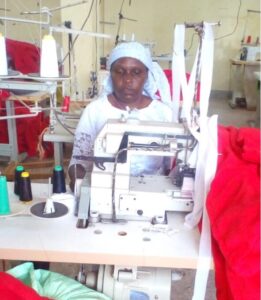 In the area of economic self-reliance, for example, KALA provides students with revolving seed capital to boost an existing business they have or to start a new business. By teaching the skills to become financially independent, KALA’s students, most of whom are women, can break free from cultural limitations like teen marriage, household roles, and lack of education.
Last week we celebrated International Day of Education on January 24, and in recognition, we want to share two essays written by women in KALA’s program that remind us of the transformative power of teaching adults to read.
Elizabeth, a learner from Machakos
My name is Elizabeth, a 50-year-old widow from Machakos. I go to Mbondoni Adult Literacy Center three times a week—Mondays, Wednesdays, and Fridays. Our classes run for two hours daily.
On Tuesdays we meet for merry-go-round. This is where we contribute to our savings scheme and borrow based on our needs and the available funds.
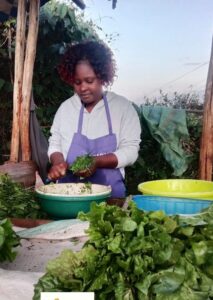
 When I was growing up, I did not attend school because my parents were illiterate. They did not see any importance of joining school because they considered it a waste of time and money. I have a small farm where I plant different vegetables, including onions, pumpkins, tomatoes, and corn (maize). I have a variety of plants, most of which are for sale.
In the past I was only planting for home use. KALA trained us on the importance of running successful businesses and using our available resources to support ourselves and our families. From the training, KALA provided me with $150, which enabled me to expand my business and have greater ideas for becoming an entrepreneur. I can do simple business calculations, keep records, and take stock.
I thank KALA for bringing this program to us here because we are now able to interact with people from other areas and learn from them.
Monicah, a learner from Murang’a
My name is Monicah, and I am a 32-year-old mother of five. I attend classes at KALA Resource Center, where I enrolled in June 2024. I did not complete my primary school education because I became pregnant at the young age of 15, a year before I could sit for my primary school examination. My parents were too poor to support me in pursuing justice.
Instead, I joined my aunt in her small grocery shop, where I was working and earning very little to support me and my parents. When I heard about KALA, I was skeptical at first. I was not sure if by joining adult literacy, I was going to benefit. I developed the desire to learn, despite my personal challenges and discouragement from my mates.
I needed to fulfill my desire to become a nurse or a doctor.
Although I’m yet to fulfill that dream, I found a new way to empower myself. I run my simple bedding business. KALA gave me a seed capital of $250 to support my business.
Although we do have good learning space at KALA Resource Center, … we want to learn using technology, integrating e-learning, virtual learning, and smart boards because the world is moving toward that direction. With the right facilities, equipment, and environment, my dream of becoming a doctor will be achieved.