
In Cambodia, 13 villages out of about 14,500 are inhabited by an indigenous ethnic minority called the Kavet. These villages are located in the Ratanakiri and Steug Treng Provinces where the population of about 7,600 people speak the Kavet language.
Kavet, like many indigenous languages around the world, is passed from generation to generation, carrying tradition, cultural pride, intellectual heritage, and unique modes of expression. And, like many indigenous languages, Kavet is in danger of dying out.
Consider that only 25 years ago, there was no alphabet or written material in Kavet. As a result, the Kavet people were vulnerable to being taken advantage of economically at farmers’ markets, and their land and their personal safety were at risk.
Multilingualism
Worldwide, the United Nations Educational, Scientific and Cultural Organization (UNESCO) estimates that 40% of learners lack access to education in their primary language—or mother tongue—affecting indigenous, migrant, and minority youth the most.
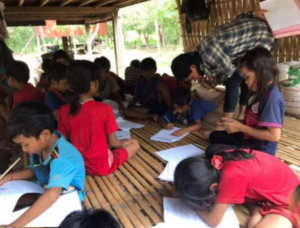 While preserving cultural languages is necessary for our diversity as humans, it’s also imperative that we find ways to remove barriers to inclusion in society. International Mother Language Day recognizes the importance of both by promoting multilingualism—the ability to use two or more languages.
In 1996, Cambodia’s Ministry of Education Youth and Sports Department of Non-formal Education embarked on a project to preserve the Kavet language using a multilingual education approach.
ProLiteracy has supported this initiative through its long-standing partnership with Non-Timber Forest Products (NTFP) in Cambodia to create learning materials.
Between 1999 and 2002, the multilingual initiative developed a Kavet alphabet and reading materials using Khmer script. (Khmer is the national language of Cambodia.) Following literacy trials using the new Kavet materials, the project went full scale by 2007 educating hundreds of villagers using a curriculum organized around topics relevant to their daily lives and culture:
- Agriculture
- Gender
- Citizenship
- Health
- Natural resources
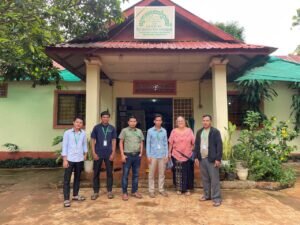 The Kavet Literacy program provides a foundation that provides basic literacy education in the native Kavet language that bridges individuals to learning Khmer so they can participate in activities within and outside their villages while maintaining the Kavet language’s cultural significance.
In just three years, students become literate in two languages—all while moving homesteads and classrooms every six months as needed to relocate torn up agricultural fields.
Kavet Literacy Success
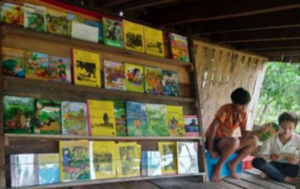 Today, the program continues to grow and is thriving beyond what anyone could have dreamed of. There are 55 literacy classes with 737 students enrolled and 110 teachers. The program even incorporates training on digital devices. That’s huge when you consider just 20 years ago there were no literate people in the language of Kavet.
Here are just a handful of the many highlights reported in 2025:
- There are at least 15 Kavet short stories in each classroom library.
- Teachers and students understand the life skills, health, and numeracy lessons presented in the Kavet materials.
- Students are no longer cheated regularly at the marketplace because they can use money and calculate purchases.
- There are now 12 Kavet illustrators drawing pictures to support the Kavet reading materials rather than outsourcing illustrations to non-Kavet artists.
- Teachers have become models of clean water and sanitation practices.
- Villagers increasingly seek treatment when in poor health, rather than believe it is a result of evil spirits.
All this, because of literacy.