North Dakota’s Two-Pronged Approach to Improving Adult Literacy in Corrections
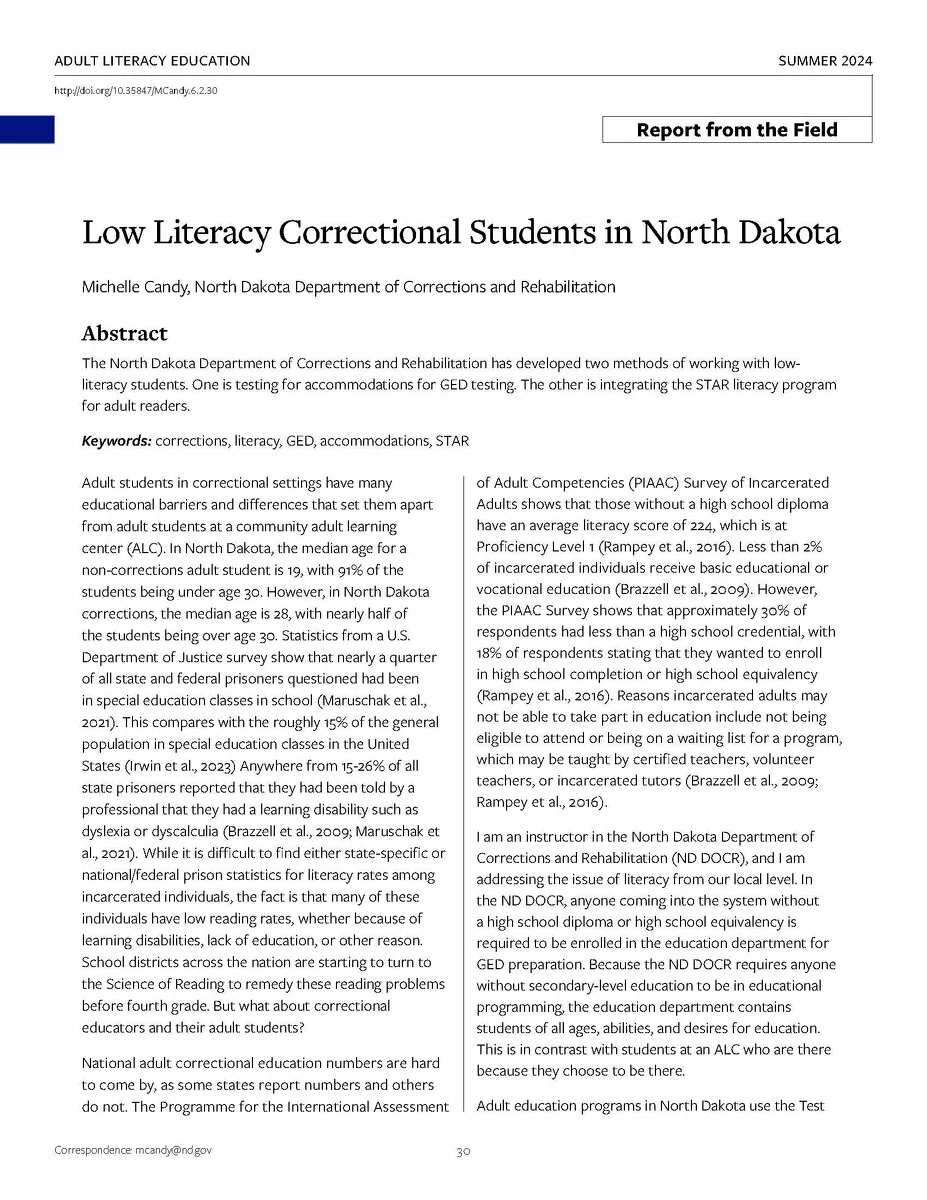
Michelle Candy of the North Dakota Department of Corrections and Rehabilitation looked at two specific measures the state has taken to increase student success.

Get the latest news and stories from the adult literacy field.

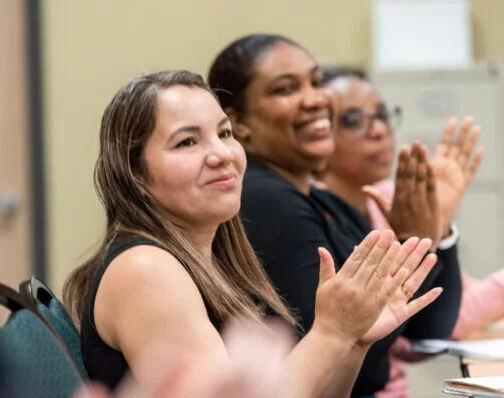
The economic and social prosperity and stability of our nation—and our local communities—depend on the ability of adults to read, write, do basic math, and think critically.
Michelle Candy of the North Dakota Department of Corrections and Rehabilitation looked at two specific measures the state has taken to increase student success.
The right to vote is an awesome responsibility open to every adult citizen in the United States—regardless of literacy level.

Ruth Johnson Colvin, a visionary and adult literacy pioneer, passed away August 18, 2024, at 107.

A group led of researchers conducted a qualitative survey to understand what conditions lead to successful technology integration in adult education programs, and what created difficulties.
Research articles published in our new issue of Adult Literacy Education recognize the importance of increased digital literacy skills as technology continues to advance.
Maribel is proof that hard work, determination, and education can open doors, no matter where you start.
