
Discussion of the skills gap in the American workforce has been a mainstay in the news cycle for several years now—millions of jobs remain vacant as employers struggle to find employees with the skills to adequately do the job. One of the primary goals of adult education is to help adults gain the skills necessary to enter the workforce and thrive personally and economically.
In an interview this past October, Georgetown University’s Nicole Smith, research professor and senior economist at the school’s Center on Education and the Workforce, commented on the skills gap and education as a way to ensure both individuals, employers, and our economy are reaching their full potential.
“If we don’t address these shortages, we risk declining productivity, output, and efficiencies across the board. That hurts not just individuals but society as a whole. People need to be adequately employed, contributing taxes and using their skills and credentials wisely. . . Better alignment between education and workforce needs is key. Expanding funding for registered apprenticeships and short-term or stackable credentials would help. These bite-sized credentials allow people to progress one step at a time instead of only through a four-year degree.”
Last July, the Data Recognition Corporation (DRC) took steps to help adults become better prepared to enter workforce prep programs and the workforce successfully when it unveiled new versions of the Tests of Adult Basic Education (TABE). The redesigned TABE 13&14 assessments are more closely aligned to the College and Career Readiness Standards and utilize content and passages that are both more relevant and accessible for adults with job-related goals.
 Placing a stronger emphasis on workforce skills is good news. It proactively puts adults into the mindset of thinking in workplace terms and scenarios as they move through TABE levels and gain the necessary academic skills to enter advanced training programs.
Most apprenticeship programs and integrated education and training (IET) programs, for example, require applicants to exhibit reading and math skills at an NRS level 4 or above. This is equivalent to having minimum skills that correlate to TABE D or the higher end of TABE M assessments. Job Corps also requires TABE assessments as a prerequisite to begin advanced training pathways.
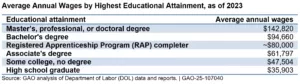
The US Government Accountability Office indicates the average annual earning potential for those who fulfill apprenticeship programs (roughly $80,000) are far higher than those of a high school graduate ($35,903), or even those with an associate’s degree ($61,797).
It’s a no brainer, therefore, to help adults understand their current skill level and to help them make measurable gains to reach the TABE levels that align with their goals so they can enter skilled training programs.
That’s why when DRC made the announcement that the TABE tests would be updated to be more accessible and relevant, we took immediate steps to ensure our TABE materials aligned to the new standards.
We worked diligently to revise our trusted TABE materials at every level to build the skills today’s adults need to make gains and thrive in daily life—and at work.
We pored over our existing TABE® Mastery and Scoreboost® for TABE® books to do full content revisions that incorporate:
- new standards, data, and scenarios;
- new question types;
- additional practice;
- shorter reading passages;
- increased diversity;
- and more.
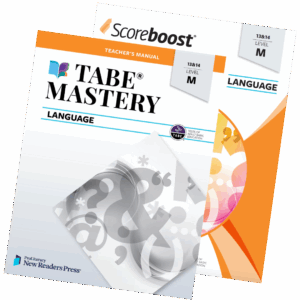 Our TABE 13&14 updates were meticulously designed to present every standard and substandard in a clear way that build on students’ prior knowledge. Content is meant to make students think and build those deeper-level skills that employers look for.
The ProLiteracy New Readers Press TABE 13&14 materials were among the first updated product lines to hit the market. Shannon Hinson is director of adult education and literacy at Moberly Area Community College in Hannibal, MO. Hinson said she was impressed that, across levels, the TABE Mastery 13&14 lessons and passages not only completely align with the new assessment blueprints but also capture the look and feel of the new TABE 13&14 assessments. That is vitally important to improve confidence of both teachers and students.
We’ve also created new TABE® Mastery Teacher’s Manuals for every level across subjects to guide teachers through the new subject matter, offering strategies for differentiated instruction using the gradual release of responsibility methodology that our materials are built on.
Skill building is important, but our goal is to put those skills to work—literally—for adults. Learn more about how ProLiteracy New Readers Press materials are designed to help adults go confidently into the next chapter of their journey: